


Exposition of Psalm 20. The theme is confidence in the Name of the LORD to deliver His people in the battle. What a blessing to know we can receive help from heaven through prayer!
Psalm 20 is written by David and addressed to “the chief musician”, so it could be used in the worship of the nation. The occasion is not given, but would suit multiple situations in David’s
Key verse: Vs. 7. The Psalm is full of faith, faith in God’s power to deliver in the battle.
Structure:
- Vs. 1-4 – The Psalmist commences with the language of a benediction. Notice the second person “thee” in these verses. It is a prayer that can be offered as a prayer for oneself or for others. It can be prayed for a family, a church or a nation. “The Psalm is a benediction of God through David, the prophet, promising God’s redeemed people blessing and help in every trouble. It is a benediction or pronouncement of blessing like Aaron’s blessing in Num. 6:22-27. Like Num. 6:22, Ps. 20:1-4 is a blessing for individuals. The pronouns are singular (“thee” and “thy”).” (David Cloud)
- Vs. 5-6 – The Psalmist anticipates victory by faith, praises God for it and expresses personal assurance in God’s power to save.
- Vs. 7-8 – The Psalmist expressed profound faith in God in contrast to those who trust in man’s machinery and might. He notes the outcome from both positions. To trust in anything but God means certain defeat.
- Vs. 9 – The Psalmist repeats in summary form the plea of the earlier part of the Psalm.
We have divided the Psalm under 4 points for our expository study.
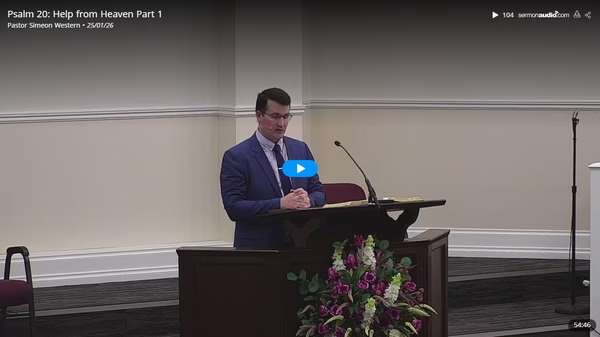
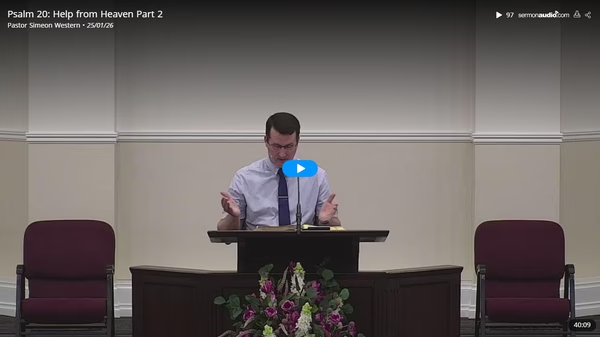
The Prayer of Faith (Vs. 1-4)
The prayer is for God’s gracious intervention on behalf of His people in the battle. Multiple pleas are presented – the LORD hear thee, defend thee, help thee, strengthen thee, remember thee, accept thee and grant thee.
Each stanza contains a Hebrew parallelism, in which the second half of the verse essentially conveys a similar sentiment to the first. Observe and personalise the four core petitions in each of these verses:
LORD, Protect Me (Vs. 1)
Hear me in the battle (Vs. 1a)
- “hear thee” = has the sense of “answer thee”. We know God hears the cry of the righteous, so the prayer is for a speedy answer in the hour of need.
- “day of trouble” – the word ‘trouble’ has the sense of “tightness, a “straight, a narrowness.” The same Hebrew word is translated ‘distress’ (Gen. 35:3, 42:21, 1 Kings 1:29), ‘tribulation’ (Jdg. 10:14, 1 Sam. 10:19), ‘adversity’ (2 Sam. 4:9, 2 Chr. 15:6), ‘adversities’ (Ps. 31:7), ‘affliction’ (2 Chr. 20:9), ‘trouble’ or ‘troubles’ (most common translation of the word) (Job. 27:9, Ps. 9:9, 20:1, 22:11, 25:17, 22) and ‘anguish’ (Jer. 4:31, 6:24, 49:24, 50:43).
- In the context of the Psalm, the trouble is a battle with the enemy. The principle can be applied in the realm of spiritual warfare, as well as to all our days of trouble and trial. Find yourself in a crisis or emergency? Find yourself in a test? Call upon God in faith and expect His aid.
Hide me in the battle (Vs. 1b)
- “the name of the God of Jacob”
- God’s Name is Powerful – God’s Name stands for who He is, His character.
- God’s Name is Personal – the reference to God being the “God of Jacob” reminds us that our God deals with us personally, as He did with Jacob during his earthly pilgrimage. Reflect on God’s faithfulness to Jacob and be assured that Jacob’s God is your God too!
- “defend thee” = has the sense “to shield from danger, injury, destruction, or damage”. It comes from the Hebrew word ‘sagab’ (pronounced ‘sagav’). The same word is translated ‘strong’ (Deut. 2:36), ‘exalteth’ (Job 36:22), “set up on high” (Ps. 69:29, 91:14, 107:41), ‘high’ (Is. 30:13), ‘safe’ (Prov. 18:10, 29:25), ‘exalted’ (Is. 2:17, 12:4) and ‘lofty’ (Is. 26:5).
- The picture is precious. The Psalmist is asking God to defend His people by placing them on high, out of reach of the enemy. Our God is our refuge. “God is our refuge and strength, a very present help in trouble.” (Ps. 46:1)
- Positionally, we are seated with Christ in heavenly places. There is no safer, more secure place than that!
- Practically, God is able to lift us out of reach of the enemy in the fierce battles we face in our Christian lives here on earth.
- The truth is expressed so beautifully in the hymn “Hiding in Thee”
1. O safe to the Rock that is higher than I,
my soul in its conflicts and sorrows would fly.
So sinful, so weary, Thine, Thine would I be.
Thou blest Rock of Ages, I’m hiding in Thee.
2. In the calm of the noontide, in sorrow’s lone hour;
in times when temptation casts o’er me its pow’r,
in the tempests of life, on its wide, heaving sea,
Thou blest Rock of Ages, I’m hiding in Thee.
3. How oft in the conflict, when pressed by the foe,
I’ve fled to my Refuge and breathed out my woe.
How often, when trials like sea billows roll,
I’ve hidden in Thee, O Thou Rock of my soul.
Refrain:
Hiding in Thee, hiding in Thee,
Thou blest Rock of Ages, I’m hiding in Thee.
LORD, Strengthen Me (Vs. 2)
Send help from the Sanctuary (Vs. 2a)
- The reference to the ‘sanctuary’ is a reference to the tabernacle of David’s day and, later, to Solomon’s temple. Here God’s Divine presence was manifest in the holy of holies atop the Ark of the Covenant.
- The prayer is for help from God Himself. This wonderful word ‘help’ is used multiple times in the Psalms to describe God as our help and to plead with God for help. For example:
- Psalm 33:20 “Our soul waiteth for the LORD: he is our help and our shield.”
- Psalm 70:5 “But I am poor and needy: make haste unto me, O God: thou art my help and my deliverer; O LORD, make no tarrying.”
- Psalm 115:9-11 “O Israel, trust thou in the LORD: he is their help and their shield. O house of Aaron, trust in the LORD: he is their help and their shield. Ye that fear the LORD, trust in the LORD: he is their help and their shield.”
- Psalm 121:1-2 “I will lift up mine eyes unto the hills, from whence cometh my help. My help cometh from the LORD, which made heaven and earth.”
- Psalm 124:8 “Our help is in the name of the LORD, who made heaven and earth.”
- Psalm 146:5 “Happy is he that hath the God of Jacob for his help, whose hope is in the LORD his God:”
- The sanctuary was the Old Testament house of worship. The New Testament house of worship is the local church. How often God supplies help through the sanctuary of the saints! Find yourself in a season of trial or trouble? Get help from the sanctuary!
Strengthen out of Zion (Vs. 2b)
- Zion (Jerusalem) was the location of the tabernacle in David’s day.
- The word ‘strengthen’ means to support, uphold. The same Hebrew word translated ‘comfort’ (Gen. 18:5, Jdg. 19:5, 8), ‘refresh’ (1 Kings 13:7), ‘holden me up” (Ps. 18:25), “held me up” (Ps. 94:18), “hold me up” (Ps. 119:117), “upholden” (Prov. 20:28) and “establish” (Is. 9:7).
LORD, Accept Me (Vs. 3)
The Psalmist now prays that God would consider and accept the offerings and burnt sacrifice that His child has offered. The prayer is grounded in the sacrifices that have been offered. The offerings put David on praying ground.
The Particulars of the Offerings
“Remember all thy offerings, and accept thy burnt sacrifice”
-
- Remember all thy offerings” – “The word occurs often in the Scriptures, and is sometimes rendered offering, and sometimes oblation. The word means an offering of any kind or anything that is presented to God, except a bloody sacrifice – anything offered as an expression of thankfulness, or with a view to obtain his favour.” (Barnes)
- “Accept thy burnt sacrifice” – the word ‘accept’ is fascinating. The same Hebrew word is translated “made fat” multiple times (Deut. 31:20, Prov. 11:25, 13:4, 28:25, Is. 34:6,7). Word also used in reference to the “ashes” from the sacrifices on the altar – “receive his ashes” (Ex. 27:3); “And they shall take away the ashes” (Num. 4:13).
- Allen P. Ross explains, “The fat was symbolic of the best, and so if God found the sacrifice ‘fat’, it meant that he would be pleased that it was the best and accept it. In ancient Israel, as in Christianity today, it was the inner condition of the heart, not the outward form of religion, that determined true, acceptable worship. God is more concerned with the inner condition of the worshipper than the gift itself (See 1 Sam. 15:22; Ps. 40:7).”
- Truly, Christ was the best sacrifice, and His offering of Himself was fully accepted by God the Father.
The Picture of the Offerings
- As New Testament believers, our prayers are grounded in Christ’s sacrifice for us. Our prayers are accepted because Christ offered Himself “once for all”. Effectual prayer is prayer offered through Christ and by the blood (Heb. 10:19).
- There is also a practical lesson that our lives need to be pleasing to God (i.e., our spiritual offerings) if we desire blessings and answers to prayer. Are we offering up the sacrifice of an obedient life?
The Pause after the Offerings
“Selah”. The word is a musical pause, offering an opportunity to pause and reflect on what has just been said. We would do well to pause and consider Calvary, where Christ offered Himself as our perfect, sinless, spotless, all-sufficient sacrifice for sin.
LORD, Answer Me (Vs. 4, 5b)
The desire is that God would favourably answer the heartfelt prayers of the supplicating saint. The prayer is that God would:
Fulfil the call from the heart (Vs. 4a)
- Effectual prayer comes from the heart, and especially a heart full of faith. Matt. 21:22 “And all things, whatsoever ye shall ask in prayer, believing, ye shall receive.”
- Effectual prayer comes from a heart submitted to God and influenced by the Word and the Holy Spirit.
Fulfil the counsel from the heart (Vs. 4b).
If counsel is sound and Scriptural, we can pray that it will be brought to fruition in people’s lives. For David, in this context, it probably referred to his battle plan and strategy. For us, we need the counsel of the Scriptures to be fulfilled in our lives.
Fulfil the cries from the heart (Vs. 5b)
- ‘petitions’ = comes from the Hebrew root “to ask” and this form of the word is found in one other verse and translated ‘desires’ (Ps. 37:4)
- Psalm 37:4 “Delight thyself also in the LORD; and he shall give thee the desires of thine heart.”
- Psalm 145:18-19 “The LORD is nigh unto all them that call upon him, to all that call upon him in truth. He will fulfil the desire of them that fear him: he also will hear their cry, and will save them.”
The Praise of Faith (Vs. 5-6)
A heart filled with faith and assured of the rightness of the prayer before God can offer joyful praise in anticipation of the answer that will surely come. The Psalm is full of confidence – “WE WILL rejoice…WE WILL set up our banners…Now KNOW I…he WILL hear” (Ps. 20:5-7). Here is a faith that can praise God before the answer actually comes. The praise focuses on God’s salvation.
The Celebration of Salvation (Vs. 5)
In the context of the Psalm, physical deliverance from the enemy is the primary thing in view. However, we can and should apply this to spiritual salvation.
The Delighting in Divine Salvation (Vs. 5a)
- Passionate praise – “rejoice”. The word means “to shout for joy”. The same Hebrew word is also translated “sing out” (1 Chr. 16:33), “sing for joy” (Job 29:13, Ps. 67:4), “shout for joy” (Ps. 5:11, 32:11, 35:27), 132:9,16), “sing aloud” (Ps. 51:14, 59:16, 81:1, 149:5), “greatly rejoice” (ps. 71:23), “shouteth” (Ps. 78:65), “rejoice” (Ps. 63:7, 65:8), “sing for joy” (Ps. 67:4), “crieth out” (Ps. 84:2), ‘triumph’ (Ps. 92:4), ‘sing’ (Ps. 95:1, Is. 24:14, 35:6, 42:11, 44:23, 49:13), “be joyful” (Ps. 98:8), “shout” (Is. 12:6), ‘singing’ (Is. 16:10) The word is found 26 times in the Psalms.
- Pointed praise – “thy salvation” (Hebrew word ‘yeshua’). Is there a grander theme for worship? Rev. 7:10 “And cried with a loud voice, saying, Salvation to our God which sitteth upon the throne, and unto the Lamb.”
The Displaying of Divine Salvation (Vs. 5b)
Banners are erected in times of battle, but more importantly, when the battle is won. The Psalmist anticipates erecting victory banners at the certain defeat of the enemy in answer to prayer. We need to fly the flag!
- Fly the flag of Calvary’s Victory – Christ defeated sin and Satan at the cross. Let us fly the Gospel flag high! Jesus has won! He conquered sin and Satan at the cross. Christ rose triumphantly over death, hell and the grave, and He lives forevermore. Be bold with the blood-stained banner of the cross!
- Fly the flag of Biblical Infallibility – We have a flag to fly for the truth! Psalm 60:4 “Thou hast given a banner to them that fear thee, that it may be displayed because of the truth. Selah.”
- Fly the flag of Personal Testimony – You have witnessed Christ’s glorious conquest in your own heart and life, where he broke down the barriers in your stubborn, sinful heart with the weapons of His love and broke the chains of sin that held you captive. As a believer, fly the flag of praise when God answers your prayers in times of trouble and test.
The Certainty of Salvation (Vs. 6)
A Personal Salvation
“Now I know that the LORD saveth his anointed”
- Notice how the Psalm moves to the first person. This is David’s own testimony of God’s salvation. He knew God’s gracious dealings from his own experience and, in faith, laid hold of the future displays of God’s power that would surely come in answer to prayer.
- David was ‘anointed’ as the king of Israel. The Hebrew word is ‘mâshı̂yach’. Ultimately, the Psalm looks beyond David, the anointed king of Israel, to Christ, the anointed King of kings and Lord of lords. The Father “saved His Son” in the sense that He preserved His earthly life from danger until it was His appointed time for the cross. The Father also saved the Son in the sense that He raised Him from the dead, never to die again.
A Powerful Salvation
“the saving strength of his right hand”
- A salvation from God’s Heaven – “he will hear him from his holy heaven”. Observe the emphasis again on the answer coming from the throne of God (See Vs. 2). The answer comes from a holy person (God) and a holy place (heaven). What a privilege to receive answers from heaven to prayers offered here on earth. What a God!
- A salvation from God’s hand – “with the saving strength of his right hand”. The right hand is the hand of strength, might and power.
The Perspective of Faith (Vs. 7-8)
The Contrast between the Objects of Faith (Vs. 7)
The Misdirected Faith in Man’s Might (Vs. 7a)
- Chariots and horses represented the military might of the ancient world. Such things tend to impress the eye of the natural man. This was where the enemy’s faith was placed. Many of Israel’s enemies were better equipped militarily. The tendency is to put confidence in men and machinery (man’s resources), and yet man’s might is nothingness when compared to Supernatural Might.
- From a human standpoint, the world’s might looks impressive. The super weapons of mass media are overwhelmingly on the side of evil. But the eye of faith looks past the glitz, glamour and grandeur of the world to see God’s throne in heaven.
- Psalm 118:8 “It is better to trust in the LORD than to put confidence in man.”
- Jeremiah 17:5-8 “Thus saith the LORD; Cursed be the man that trusteth in man, and maketh flesh his arm, and whose heart departeth from the LORD. For he shall be like the heath in the desert, and shall not see when good cometh; but shall inhabit the parched places in the wilderness, in a salt land and not inhabited. Blessed is the man that trusteth in the LORD, and whose hope the LORD is. For he shall be as a tree planted by the waters, and that spreadeth out her roots by the river, and shall not see when heat cometh, but her leaf shall be green; and shall not be careful in the year of drought, neither shall cease from yielding fruit.”
The Godly Faith in God’s Might (Vs. 7b)
- “but” = signals a contrast to the previous position. In contrast to men of the world, our faith is not in man and man’s machinery but in God and God’s Might!
- “remember” = Sense: to believe (trust) – to have faith; put one’s trust in something. (Logos Exegetical Guide) To remember God is to rest the soul upon Him in faith. To remember God is to look to Him in faith in the midst of the battle. To “remember” God is to put faith in Him and His promises rather than in man.
- “the name of the LORD” = what power there is in God’s Name because of the character of the God behind the Name. God’s Name stands for who He is. Here, the Psalmist uses the name “Jehovah” (LORD), reminding us that He is the self-existent, ever-present, Almighty, covenant-keeping God.
The Contrast between the Outcomes of Faith (Vs. 8)
Those trusting in men are vanquished (Vs. 8a)
Two words describe their defeat:
- “brought down” = has the sense of “to bow down – to get into a prostrate position, as in submission, homage.” (Logos Exegetical Guide) The same word is also translated “subdued” (2 Sam. 22:40, Ps. 18:29), “sunk down” (2 Kings. 9:24), “bow” or “bow down” (frequently) (e.g., Ps. 20:8, 72:9, 95:6, Is. 46:1-2, 65:12)
- “fallen” = to fall, suffer defeat, failure or ruin.
Those trusting in God are victorious (Vs. 8b)
Two words describe the outcome for the faithful, in contrast to the description of the defeat of the wicked.
- “are risen” = has the sense of “to rise to one’s feet”.
- “stand upright” = has the sense of “to stand firm (resist)”. The same Hebrew word is translated “solemnly protest” (Gen. 43:3, Sam. 8:9), “earnestly protested” (Jer. 11:7), “protested” (1 Kings 2:42, Zec. 3:6), “bear witness against” (1 Kings 21:10,13), “testified” (2 Kings 17:13, 15, 2 Chr. 24:19, Neh. 9:26, 13:21
The Plea of Faith (Vs. 9)
Save Us O Lord (Vs. 9a)
The word ‘save’ means “to save from ruin, destruction, or harm; to deliver”.
- You need to call on God to save you from sin. Have you done that?
- You need to call on God to deliver you in battle (context here). When you find yourself in a fierce battle with the world, flesh or devil, do you ask God for help?
Hear Us O Lord (Vs. 9b)
- To ask God to hear is to ask Him to receive and honour our prayer before Him. It is a plea for an answer.
- Psalm 34:15 “The eyes of the LORD are upon the righteous, and his ears are open unto their cry.”
Conclusion
- Theological lessons (what we learn about God)
- God hears the cry of His children and is a very present help in times of trouble.
- God accepts His Son’s sacrifice, and we are accepted in the beloved.
- God blesses faith-filled praying.
- Christological lessons (what we learn about Christ)
- Christ is the anointed One.
- Christ’s was the perfect sacrifice.
- Christ is our salvation.
- Soteriological lessons (what we learn about salvation)
- Salvation comes from heaven. It is God’s work! Our job is to call upon Him.
- God’s salvation is powerful and effectual.
- Practical lessons (what we learn about the Christian life)
- God is a very present help in times of trouble if we will call upon Him.
- God grants us the desires of our hearts when they are in line with His will.
- We need to fly the banner of truth high in the battle. We also need to fly the banner of praise high for the victories the Lord gives us.
- Faith sees God in the battle, prays to God in the battle and sees the victorious outcome of the battle by the power of God.
- Faith-filled prayer is effectual prayer.
Sermon 28 & 29 in Heaven’s Hymnbook (the Psalms)
Sermon Audio Id: 123268387881 & 124262046482861